Plan pantry meals for a power outage.
A useful outage pantry fits the people eating from it, the safe water available, and the tools that still work without electricity.
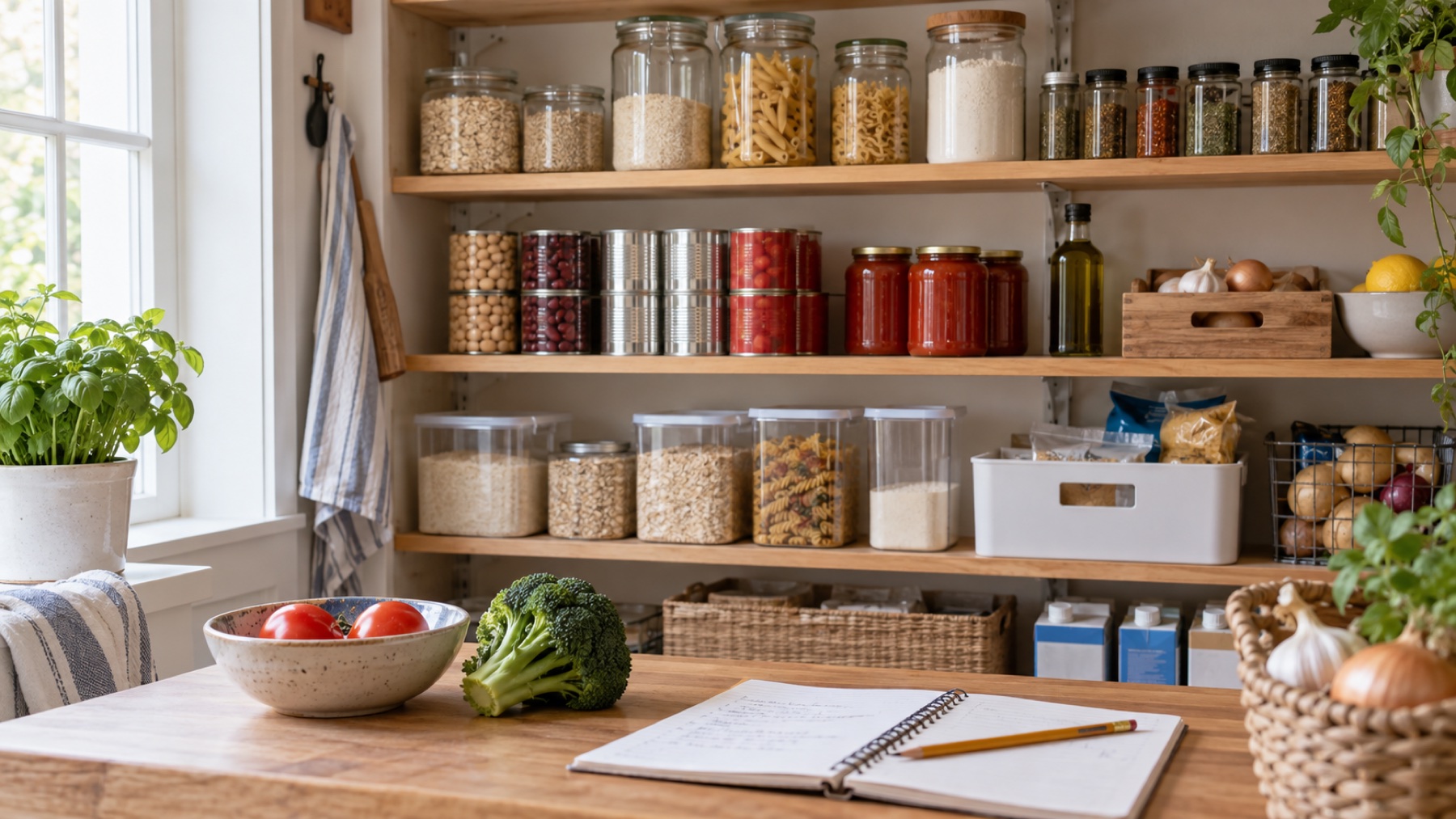
Protect cold food before opening it
USDA advises keeping refrigerator and freezer doors closed during an outage. A refrigerator keeps food cold for about four hours if unopened; a full freezer for about 48 hours, or about 24 hours when half full. Use appliance thermometers and current USDA guidance to decide what to keep. Never taste food to judge safety.
Build one day on paper
| Meal | Shelf-stable frame | Check before relying on it |
|---|---|---|
| Breakfast | Oats or cereal, shelf-stable milk, fruit | Whether it requires heating or extra water |
| Lunch | Crackers or tortillas, canned fish/beans, fruit | Allergies, manual can opener, leftovers |
| Dinner | Ready-to-eat beans, vegetables, grain product, sauce | Can it be safely eaten without cooking? |
Include snacks, infant feeding needs, medication-related diets and pet food. Choose package sizes that can be finished promptly when refrigeration is unavailable. Store at least one manual can opener.
Practice without wasting food
Once a season, make one planned no-cook meal during normal conditions. Record missing tools, disliked foods, hidden water demand and packaging that creates unusable leftovers. Replace the meal on paper before increasing quantities.