The pantry-first weekly reset
Start the shopping list after you see what the kitchen can already make. The goal is three dependable meals, not a perfect spreadsheet.
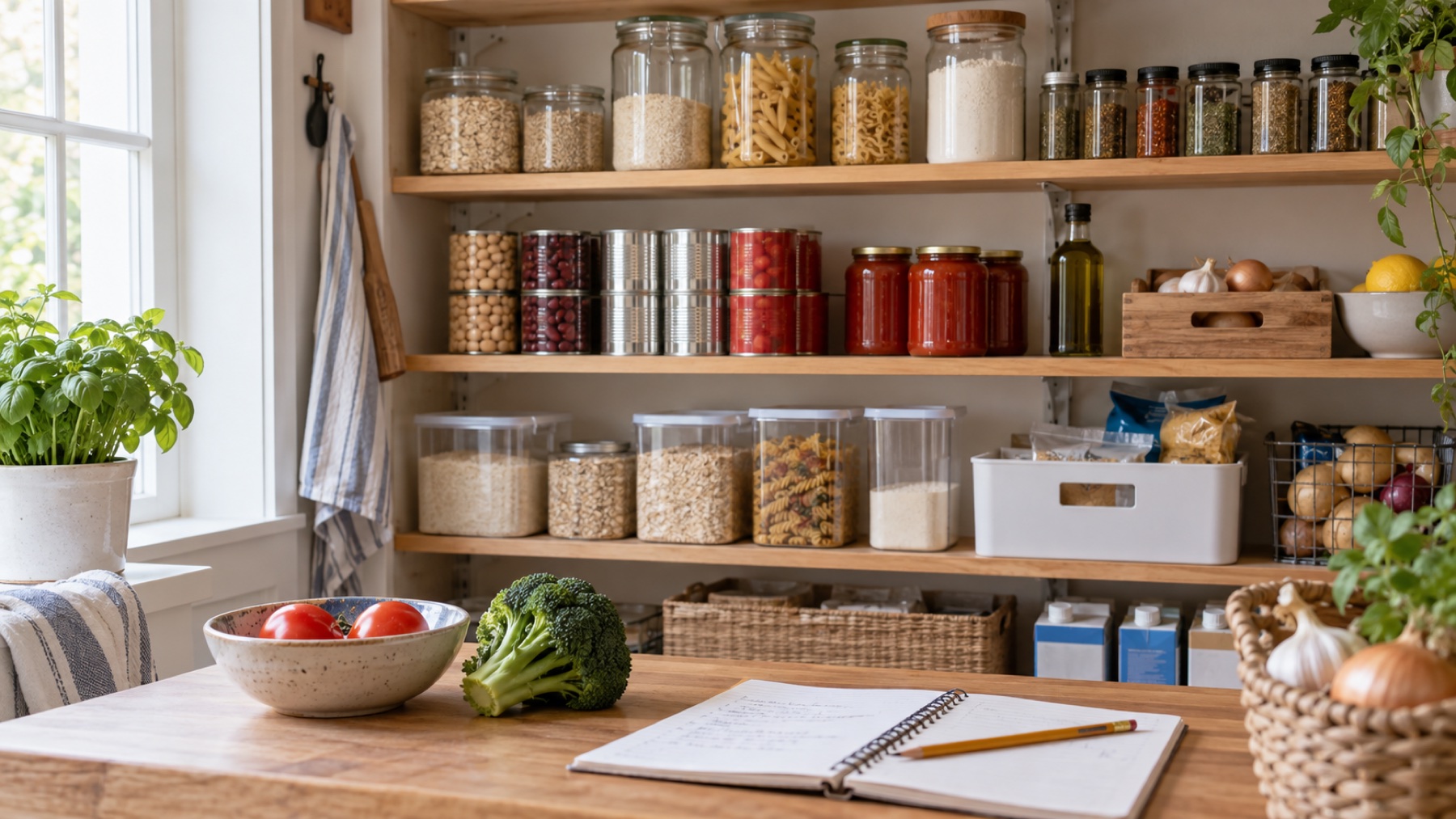
Minute 0–3: choose the use-first foods
Check the refrigerator first, then the freezer and pantry. Pull forward opened packages, aging produce and foods near the maker’s quality date. Put them in one visible area. Do not keep damaged, leaking, bulging or badly rusted cans.
Minute 3–7: build three meal frames
| Frame | Pantry base | Use-first additions |
|---|---|---|
| Soup or stew | Beans, tomatoes, broth, grain | Vegetables, cooked meat, herbs |
| Skillet or bowl | Rice, pasta or another grain | Greens, sauce, egg or shelf-stable protein |
| Tray or bake | Potatoes, canned beans, seasoning | Vegetables, cheese or leftovers |
Pick only combinations your household is likely to eat. A bargain that sits untouched is not part of a resilient pantry.
Minute 7–10: buy the missing links
Write the smallest list that completes the meals and replaces frequently used staples. Record one quick count for high-use items. Keep unfamiliar bulk purchases small until a recipe has earned a place in rotation.
Current 2026 discussion around household food waste emphasizes checking pantry stock and adapting plans throughout the week. The practical lesson is simple: review often enough that ingredients remain visible while there is still time to use them.