A recall names the product. The codes tell you whether it is yours.
A headline may name a familiar brand, but a recall is usually narrower than every package carrying that logo. Put the notice beside the package and match each identifying detail before you keep, return, or discard anything.
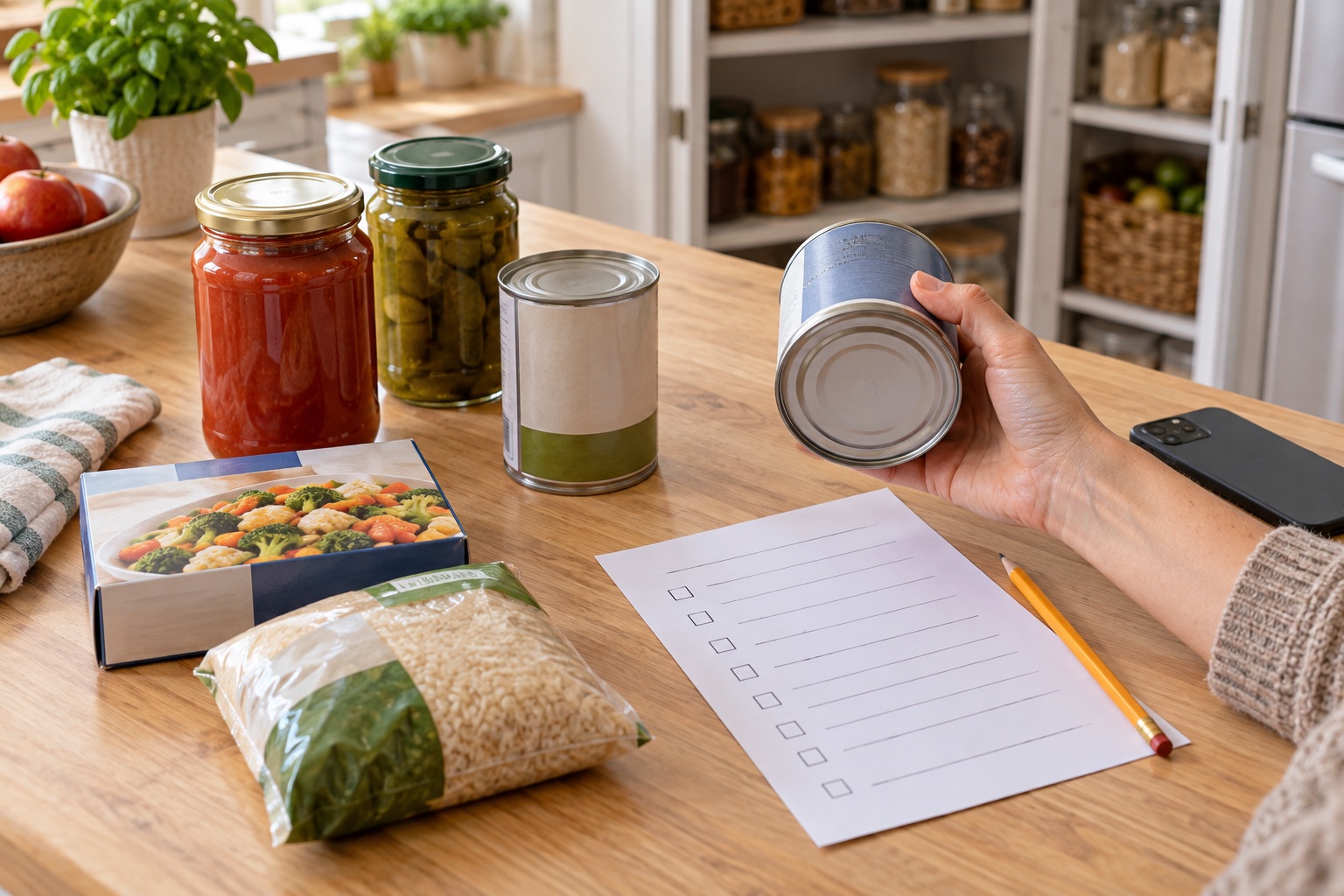
The six-detail recall check
- Brand and exact product name
- Package type and size
- UPC or other product identifier
- Lot, batch, establishment, or plant code
- Best-by, use-by, sell-by, or production date
- Distribution area, retailer, and product image
Begin with the original notice
Find the recall on an official page before changing your pantry. FDA covers most foods, while USDA's Food Safety and Inspection Service covers meat, poultry, and processed egg products. A news story or social post can alert you, but the agency notice is where you will usually find the complete identifying codes, package photos, distribution details, reason for the recall, and instructions.
FDA's recall guidance says notices may include the product name, package size and type, UPC, lot codes, sell-by or use-by dates, label photos, and the states or stores where the food was sold. USDA FSIS recall releases likewise use labels, lot or date codes, and establishment numbers when those details are available. The safe decision comes from the combination, not from recognizing one word in a headline.
Match from broad to specific
| Field | Where to look | Why it matters |
|---|---|---|
| Product and variety | Front, side, or ingredient panel | One flavor, formulation, or package style may be affected while a similar one is not. |
| Package size | Net weight or count statement | The same product may use different production runs for different sizes. |
| UPC | Numbers below the barcode | It distinguishes a specific retail item, but it may still need to be paired with a lot or date. |
| Lot or batch code | Ink-jet stamp, seal, lid, bottom, neck, or back panel | It connects the package to a production run. |
| Date code | Near the lot code or package seal | A recall may cover only a defined date range. |
| EST or plant number | USDA inspection mark or nearby label area | For FSIS-regulated food, it helps identify the producing establishment. |
Read every character. A zero and the letter O, or a one and the letter I, can look alike on curved, frosty, or crimped packaging. Compare a photo from the notice if one is supplied. If the code is hidden by frost, condensation, or a pantry bin, move the product without opening it and improve the light.
Do not stop at the UPC
A matching UPC can prove that you have the right retail item, but it may not prove that you have the affected production lot. The reverse is also true: a matching date on a different size or variety is not enough. Treat the notice like a short equation. When it lists brand + product + size + UPC + lot + date, your package should match every required term.
Check the distribution details carefully
A notice may list states, retailers, online sales, distributors, or institutions. This helps narrow the search, but distribution lists can expand as an investigation continues. FDA also notes that later distribution by customers may not be fully represented in an initial list. If the package identifiers match but the store or state seems different, use the company or agency contact rather than clearing the product on location alone.
Frozen and shelf-stable foods deserve a longer memory. A product purchased months earlier can still be in a freezer, pantry, emergency kit, vacation property, office kitchen, or relative's home. Search the places where food migrates, not just the main kitchen shelf.
When the package matches
Follow the product-specific instructions in the recall. FDA says recalled food may often be returned for a refund; when disposal is directed, contaminated food should be wrapped securely. Do not donate it, give it to another person, or feed it to a pet. Keep children and animals away from the discarded package.
Before the item leaves your control, photograph the front, UPC, lot and date code, and receipt if you have it. That record can help with a refund, a consumer question, or an illness report. It also prevents the common problem of throwing out the only identifying information before confirming what was involved.
Clean according to where the food was stored
A sealed dry package that never leaked does not create the same cleanup problem as a contaminated refrigerated food. Follow the recall's exact directions. CDC advises throwing out a recalled refrigerated food and foods stored with or touching it, placing the recalled food in a sealed bag, and washing reusable containers with hot, soapy water. Removable refrigerator parts, interior surfaces, counters, hands, and cleaning materials also need attention; CDC's current refrigerator-cleaning page provides the sequence and an optional sanitizing step.
Keep perishable food out of refrigeration for as little time as possible during cleaning. CDC's instructions say not to leave it out for more than two hours. Let cold glass shelves warm before washing them with hot water so they do not crack.
If someone ate the food
Read the recall notice for the named hazard, possible symptoms, and any advice for people at higher risk. If someone has symptoms or a serious allergic reaction, FDA advises contacting a healthcare provider for care and reporting the problem through its consumer channels. For meat, poultry, or processed egg products, the FSIS notice provides its consumer contact information. Keep the package details and purchase information available.
A recall notice does not prove that every affected package caused illness, and the absence of symptoms does not change the instructions for an identified product. The practical task is to stop using the matched item and follow the official direction.
Make the next check easier
When you move flour, rice, cereal, powdered milk, pet food, or snacks into another container, save the original label until the food is gone. Clip out the product name, allergen panel, UPC, lot code, and date, or photograph them and name the file clearly. FDA specifically emphasizes saving lot information for pet food because that code can determine whether a product is included.
Add a small recall line to the weekly pantry reset: scan current official notices, then check the freezer and backup shelves for long-lived products. Pair that habit with the package-date guide so quality dates do not get confused with recall identifiers.
Official recall sources
Research reviewed September 23, 2026:
- FDA: Recalls, Market Withdrawals, and Safety Alerts
- FDA: Food Recalls—What You Need to Know
- USDA FSIS: Recalls and Public Health Alerts
- USDA FSIS: Understanding Food Recalls
- CDC: How to Clean Your Refrigerator Because of a Food Recall
Recall details can change. Reopen the current agency notice when making a decision.