Check the baking pantry before the first big batch.
Choose the recipes, count what they require, then check each ingredient for condition and performance. The goal is not to throw out every package past a date. It is to catch weak leaveners, rancid high-fat ingredients and missing quantities before the oven is hot.
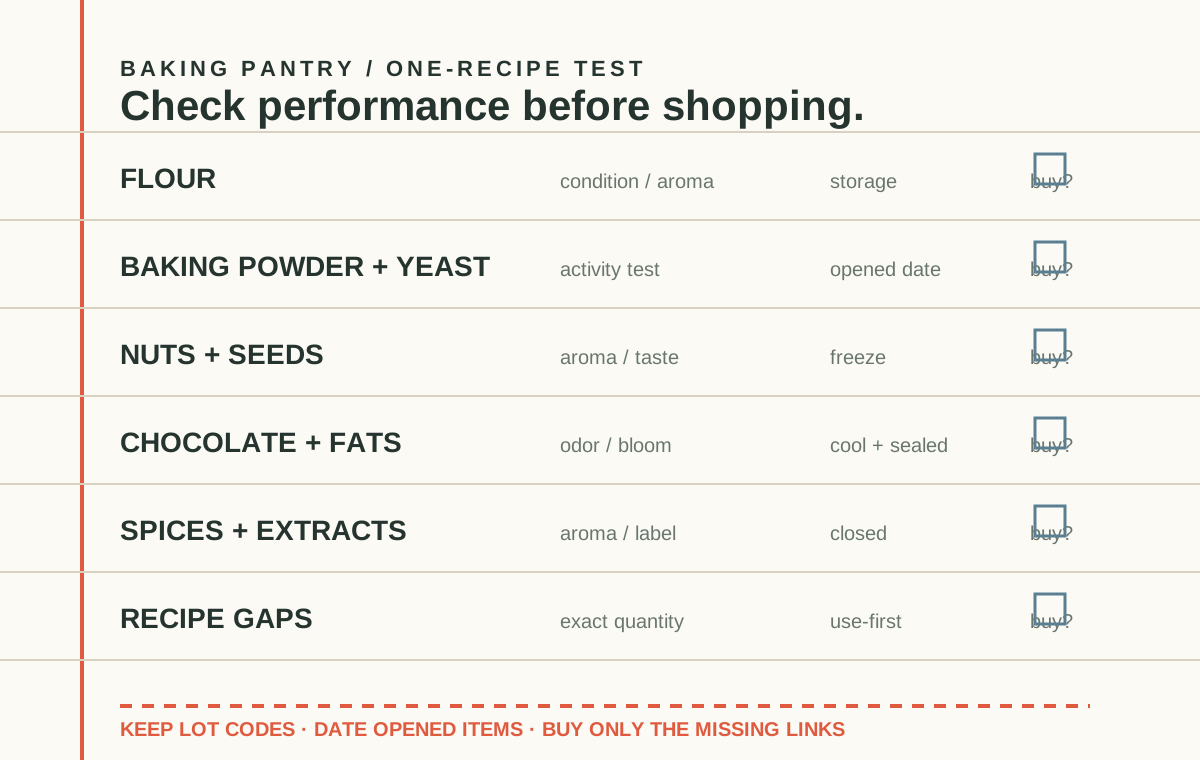
Start with three columns
- Use first: opened packages that still pass a condition or activity check.
- Store better: ingredients that need a sealed, cooler or frozen home.
- Buy: only the amount missing from the selected recipes, plus a small tested staple buffer.
A date is one clue, not the whole audit
FDA explains that, except for infant formula, federal law generally does not require quality-based dates on packaged foods. “Best if Used By” describes expected flavor or quality, not a universal safety deadline. That does not mean every old package is automatically usable. The exact ingredient, package, storage history, visible condition, manufacturer directions and any recall notice still matter.
Read the full label before moving an ingredient into a canister. Record the product name, date and lot code, especially for flour, nuts, chocolate and mixes. If the original package is discarded, keep a photograph or clipped panel with the new container. That preserves allergen, recall and preparation information.
Discard packages with insects, webbing, moisture, mold, unexplained clumps, torn seals, off odors or evidence that a spill entered the food. Do not taste visibly spoiled or recalled food. Use the exact-match recall checklist when a notice names a baking ingredient.
Build the list from recipes, not from the baking aisle
Pick the actual recipes and expected batch counts first. Make one line for every ingredient, unit and total quantity. Combine only identical ingredients: all-purpose flour is not automatically interchangeable with bread, cake, whole-wheat, nut or gluten-free flour. Natural cocoa and Dutch-process cocoa are not always interchangeable because their acidity can change how a recipe’s leavener behaves.
| Ingredient | Recipe total | Usable on hand | Gap | Decision |
|---|---|---|---|---|
| All-purpose flour | _____ cups / grams | _____ | _____ | Use first / buy |
| Baking powder | _____ tsp | Pass / fail test | _____ | Keep / replace |
| Nuts | _____ cups / grams | _____ | _____ | Freeze / buy |
| Chocolate | _____ ounces / grams | _____ | _____ | Use first / buy |
| Spices and extracts | _____ | _____ | _____ | Keep / refresh |
Measure opened packages rather than guessing from the outside. A partial bag that “looks like enough” causes duplicate shopping or a mid-recipe shortage. Keep substitutions separate until the recipe or a trusted baking source confirms the swap. Utah State Extension’s substitution list notes that substitutions may change flavor, color, texture or volume even when the result remains acceptable.
Flour: identify the type, then check heat, moisture and odor
White flour generally keeps quality longer at room temperature than whole-grain or specialty flours because whole grains and many nut flours contain more oils that can oxidize. Penn State Extension recommends keeping whole-wheat flour refrigerated year-round. Utah State Extension advises a tightly sealed container away from heat and moisture and recommends freezing whole-wheat flour in freezer bags to prolong quality.
Look for insects, webbing, unexpected dark specks, damp clumps and a stale, musty or rancid odor. Compare the aroma with a fresh package when uncertain. Do not try to rescue visibly moldy or heavily infested flour. Clean the shelf and inspect nearby grains, mixes, nuts and spices if pantry pests appear.
Keep the flour bag inside a larger covered container when practical. The bag retains identity and instructions; the outer container limits spills, moisture and pests. If flour is refrigerated or frozen, use a well-sealed moisture-resistant package. Penn State advises allowing cold flour to return to room temperature before baking so it does not interfere with ingredients such as baking powder or yeast. Keep the container sealed while it warms to reduce condensation on the flour.
Baking powder, soda and yeast: test performance before a full recipe
Moisture is the enemy of dry leaveners. Utah State Extension notes that baking powder and baking soda can react and chemically change when exposed to moisture, while yeast loses viability. Keep the original container closed, use a dry measuring spoon and write the opened date on the lid or a nearby pantry label.
For opened baking powder, Utah State Extension recommends mixing 1 teaspoon with 1/3 cup warm water. Bubbling shows remaining activity. Treat this as a performance screen, not a repair: replace powder that is damp, contaminated, oddly clumped or fails to react. The Extension source places opened baking powder at roughly six months for quality planning, while the package label should control the exact product.
For active dry yeast, Utah State Extension describes a viability check using 1 teaspoon sugar in 1/4 cup water around 100°F, followed by one envelope—2¼ teaspoons—of yeast. After 10 minutes, foam reaching the 1/2-cup mark indicates activity in that procedure. Use the yeast maker’s directions when they differ, and never guess water temperature if the recipe depends on it.
Baking soda has no acid component and should not be tested or substituted as if it were baking powder. Follow the recipe. If cookies spread or a cake fails, investigate ingredient type, measuring method, oven temperature, fat temperature and mixing as well as leavener age. Recent public baking discussions show how often an old can gets blamed for every flat cookie; the useful habit is controlled testing, not a single-cause assumption.
Nuts, seeds, whole grains and nut flours: protect the oils
High-fat ingredients can turn rancid when exposed to heat, oxygen and light. Penn State Extension recommends freezing nut meats with minimal exposure to light and oxygen; a well-sealed freezer bag or container works better than an open pantry package. Utah State’s holiday-baking guidance likewise recommends freezing nuts for longer storage.
Open the package and check aroma before adding nuts to dough. A paint-like, bitter, sharp or otherwise unpleasant odor is a reason not to use them. If the aroma is normal, taste a single piece only when there is no spoilage, contamination, allergy or recall concern. Label frozen nuts with the type, date and amount so they remain visible to the meal plan.
Keep nut flours, wheat germ and whole-grain meals with the same high-fat logic. Freeze small portions, remove only what a recipe needs and avoid repeated warming of the full package. If a household has food allergies, do not repurpose shared containers without a cleaning and cross-contact plan. Recheck every ingredient label for each purchase; formulations can change.
Chocolate, fats, spices and extracts: separate appearance from function
Chocolate can develop a pale surface layer after temperature swings. Utah State Extension notes that warm storage can create this bloom and make chocolate less suitable for dipping, where appearance and temper matter. Before discarding it, check the label and evaluate odor, package condition and the needs of the recipe. Chocolate intended to melt into brownies has a different quality threshold from a glossy coating.
Butter, shortening and oils can pick up off odors or become rancid after exposure to air. Utah State Extension advises against baking or icing with a fat that has an off odor. Keep containers closed, away from heat and strong aromas, and use older sound fats in the next planned recipe rather than buying duplicates.
Spices gradually lose aroma and strength. Open the jar away from steam, rub a small amount between clean fingers and smell it. A weak spice may underperform even when it is not unsafe. Avoid pouring directly over a steaming pot, because moisture enters the jar. Extracts should remain tightly closed and stored according to their label; alcohol-based extracts are generally stable at room temperature, but flavored oils deserve the same rancidity check as other fats.
Run one small test batch when the ingredient matters
A pantry audit cannot guarantee a finished bake. The oven, pan, recipe ratios, mixing and ingredient temperature also matter. When flour, leavener, nuts or chocolate are questionable for quality—but show no spoilage, contamination or recall issue—make the smallest practical test batch. Record the exact ingredients and result.
- Use the intended recipe and measuring method.
- Change only one uncertain ingredient at a time.
- Measure oven temperature with a separate oven thermometer if repeat failures occur.
- Compare rise, spread, aroma, texture and flavor after the product cools as directed.
- Keep, repurpose or replace the ingredient based on the result and the next recipe’s needs.
Do not test an ingredient by feeding it to guests first. A small weekday batch gives time to correct the list and reduces the temptation to buy every staple again.
Print the one-recipe pantry audit
Holiday baking pantry audit
Recipe / batches
Bake date
Flour type / amount
Condition / storage
Leavener / opened
Activity result
Nuts / amount
Aroma / storage
Chocolate / fat
Condition
Spices / extracts
Strength / label
| Use first | Store better | Buy exact gap |
|---|---|---|
Test-batch result and next action
Bring the final “buy exact gap” column into the pantry-first weekly reset. After the holiday, move sound open packages into a visible use-first zone and connect them to real meals or bakes. The five-meal buffer method is useful for keeping the rest of the pantry tied to complete meals rather than leftover ingredients.
Frequently asked questions
Can baking powder work after its best-by date?
Possibly. The date is a quality signal, and storage after opening matters. Use the Utah State Extension warm-water activity test, inspect for moisture or contamination and follow the package directions. Replace it when it fails or when reliable performance matters more than the cost of a new can.
Can flour be stored in the freezer?
Yes. Use a tightly sealed moisture-resistant package. Whole-wheat and other higher-fat flours benefit most from cold storage. Let cold flour warm in its closed container before baking when the recipe depends on ingredient temperature.
Should nuts be refrigerated or frozen?
For longer storage, Penn State Extension recommends freezing nut meats with minimal light and oxygen exposure. Refrigeration can support shorter storage. Label the package and keep it well sealed.
Does white bloom mean chocolate is unsafe?
Bloom often reflects fat or sugar movement after temperature or moisture changes and can reduce appearance or dipping performance. Check package condition, odor, label directions and intended use. Discard chocolate with spoilage, pests, contamination or a recall match.
Sources
Reviewed November 11, 2026. Follow the current package label and manufacturer directions for the exact ingredient.
- Utah State University Extension — Gearing Up for Holiday Baking.
- Penn State Extension — Storing Staple Ingredients in the Kitchen.
- Utah State University Extension — Cooking Food Storage.
- Penn State Extension — Canning and Freezing Questions and Answers.
- FDA — How to Cut Food Waste and Maintain Food Safety.
- FoodSafety.gov — FoodKeeper App.